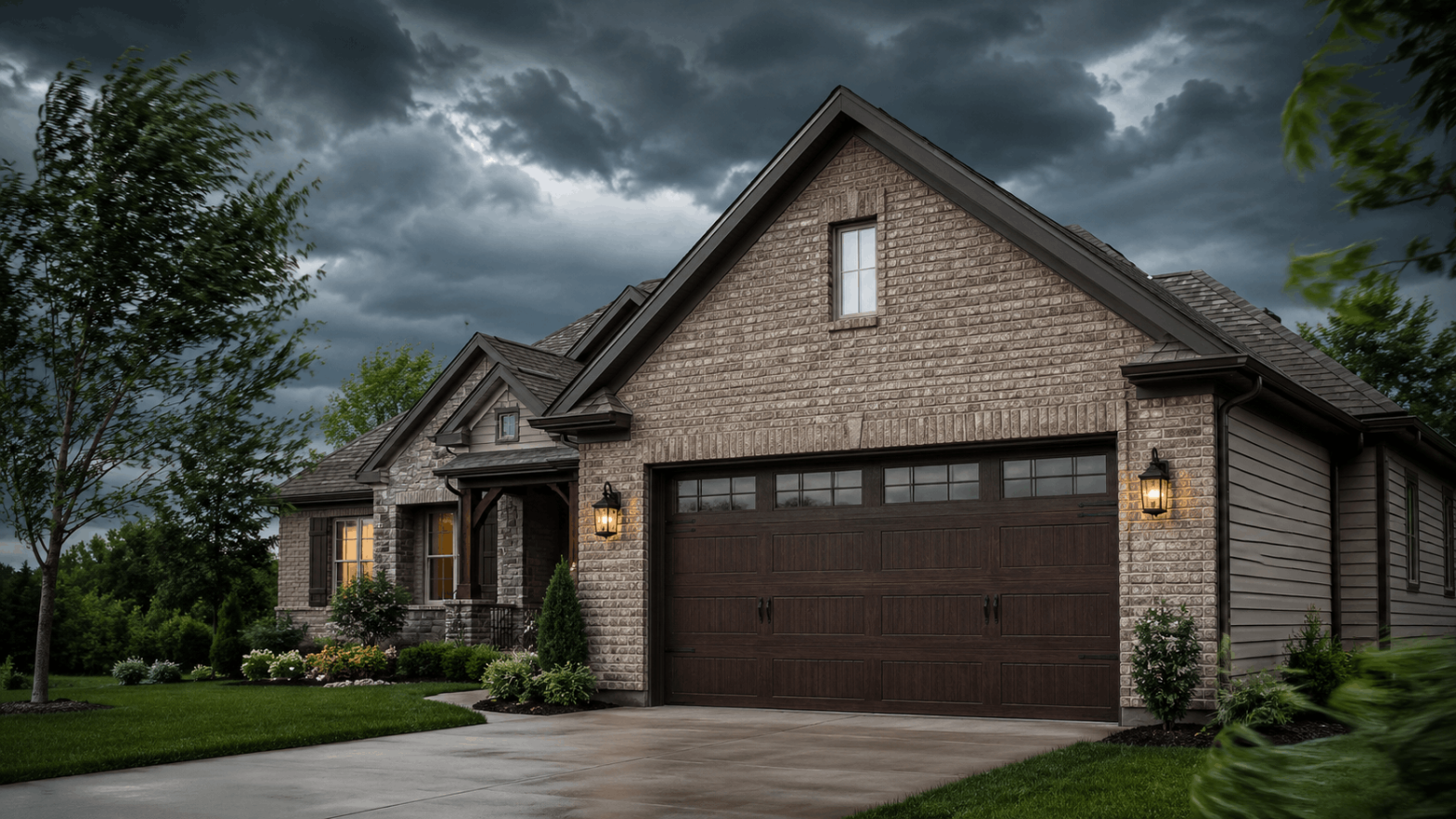
Storm-Season Garage Door Prep: A Tennessee & Alabama Homeowner’s Guide
If you live in Tennessee or North Alabama, you already know: storm season is a real season. Spring tornadoes, summer derechos, fall remnants of Gulf hurricanes, and the occasional ice storm in winter. And here’s the under-discussed truth — your garage door is one of the most vulnerable points on your entire home during high wind events.
When a garage door fails in a storm, it doesn’t just break the door. It causes internal pressurization, which can lift the roof off the structure. That’s not hyperbole — it’s why building codes in coastal states have been tightening garage door wind ratings for decades.
The good news: a few hours of prep and a $0 inspection round can dramatically reduce your risk. Here’s the playbook.
How Garage Doors Fail in High Winds
There are three primary failure modes:
- Inward collapse — wind pressure pushes the door inward, off its tracks or through the opening
- Outward suction — pressure swings reverse and pull the door outward
- Track and bracket failure — even an intact door fails if the hardware bolting it to the home gives way
Each of these is preventable with the right combination of wind-rated doors, bracing, and basic maintenance.
Step 1: Know Your Door’s Wind Rating
Garage doors are tested and rated to withstand specific wind speeds and pressures. Newer doors have a sticker on the inside (often near the bottom hinge) or a model number you can look up.
Quick rules of thumb for the Southeast:
- Standard residential doors (no wind reinforcement): typically rated for 75–90 mph wind
- Wind-rated / impact-rated doors: 120–150+ mph capable
- Older or budget builder-grade doors: often unrated or rated below 75 mph — these are the highest-risk
If you don’t know your rating and your door is more than 10 years old, it’s worth a professional inspection.
Step 2: Add a Wind Bracing Kit (If Appropriate)
If you can’t afford a full wind-rated door replacement, a post-and-bracket bracing system can dramatically increase the wind resistance of your existing door. These are vertical steel posts that drop in from the floor to the ceiling track on the inside of the door when a storm is forecast.
- Best for: Homeowners with otherwise solid doors who want a budget upgrade
- Install time: A pro can install the brackets in 1–2 hours
- Deployment: Add the posts before the storm; remove after
We install and stock these for homeowners across the region.
Step 3: The Pre-Storm Inspection Checklist
When severe weather is in the forecast, walk your garage door with this short checklist:
- Springs — no visible gaps, rust, or fraying
- Cables — no fraying or kinks
- Rollers and hinges — secure, lubricated, no visible wear
- Tracks — straight, level, and firmly bolted to the wall
- Weather seal at the bottom — fully sealed, not cracked or torn
- Photo-eye sensors — clean, aligned, working
- Wall and ceiling fasteners — all screws/bolts tight, no separation from drywall or framing
- Opener — disengage and re-engage the manual release; make sure it works
If anything looks wrong, get it serviced before the storm — not during the next outage.
Step 4: Power-Out Protection — Battery Backup Openers
A garage door you can’t open during a power outage is just a wall. If you’ve ever been stuck unable to get a car out before evacuating or after a downed-tree event, you know how stressful this is.
A modern battery-backup smart opener keeps the door working for 20–50 cycles during an outage and often sends an alert to your phone if the power drops. For most Tennessee and Alabama homes, this is one of the highest-value upgrades you can make.
Step 5: After the Storm — What to Check
Once it’s safe to go outside, inspect your door before operating it:
- Step back and look at the whole door. Is it bowed, dented, or visibly out of alignment?
- Look up at the tracks. Are they still straight and bolted to the wall?
- Check the bottom seal and corners for impact or debris damage.
- Listen for unusual sounds when you operate the door. Grinding, popping, or scraping means stop and call.
- Even if it looks fine, a hidden bent track or stressed spring can fail catastrophically a week later. After any major storm, a professional inspection is cheap insurance.
When to Call Us Immediately
Don’t try to “limp” a damaged garage door. Call us if:
- The door is off its tracks
- You hear a loud bang followed by a heavy door (usually a snapped spring)
- The door is bowed or buckled but appears to be holding
- The opener motor runs but the door won’t move
- Cables look frayed, loose, or hanging
A broken garage door spring can cause severe injury if you try to work on it yourself. This is genuinely the one repair where DIY is a bad idea.
Insurance Note
Most homeowner’s policies cover storm damage to garage doors, including doors damaged by wind, hail, or impact. Take photos before any work begins and ask your insurer about the deductible. We can provide written estimates and damage documentation as part of the claim process.
Storm-Season Garage Door FAQs
Q: Do I really need a wind-rated garage door in Tennessee or Alabama? A: If your home was built before tightened codes and you’re in tornado alley, the upgrade is highly recommended. At minimum, a bracing kit is a smart investment.
Q: How do I know my door’s wind rating? A: Check for a sticker inside the door (often near the bottom hinge). If there’s no rating listed, it’s likely unrated.
Q: Can you install a bracing kit on my existing door? A: In most cases, yes. We’ll inspect to confirm the door and tracks can support the bracing.
Q: What’s the most common storm-related repair you do? A: Bent tracks, snapped cables from impact, and panel replacements after wind-driven debris.
Q: How long does emergency garage door service take? A: We aim for same-day emergency response across our service areas. Call as early as possible.
Storm coming? Call or message Rose Quality Garage Doors early — the day before is always better than the day after. We’ll inspect, brace, or repair your door so your home is ready.