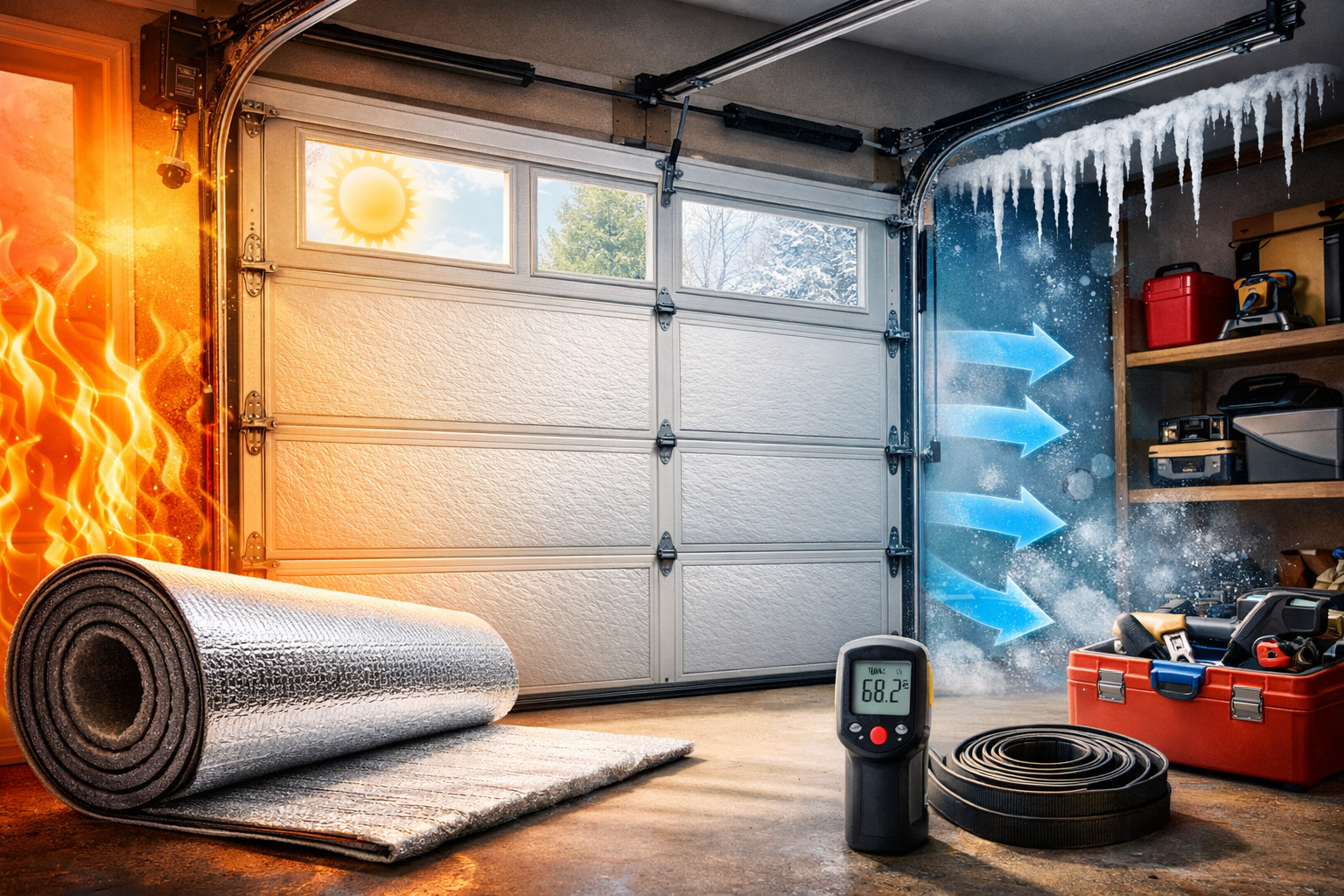
Energy Efficiency and Insulation: How Your Garage Door Can Help
If you’re trying to make your home more comfortable and energy-efficient, you’ve probably thought about windows, attic insulation, HVAC upgrades, and maybe even new exterior doors. But there’s one “big opening” many homeowners overlook: the garage door.
A typical two-car garage door is one of the largest moving parts of your entire home—and one of the largest surfaces separating your indoor comfort from Tennessee heat, humidity, and winter cold snaps. When that door is thin, uninsulated, or poorly sealed, it can act like a giant thermostat sabotage device—pulling comfort out of your home and forcing your HVAC system to work harder.
Whether you’re considering a new garage door installation or you’re dealing with an aging door that needs repair, insulation and energy performance should be part of the conversation. Below, we’ll break down how insulated garage doors improve energy efficiency, what to look for when choosing one, and how to maintain it so it performs at its best for years.
Rose Quality Garage Doors helps homeowners across Nashville, Murfreesboro, Franklin, Clarksville, and Knoxville, TN with garage door repair and garage door installation—so if you want help choosing an insulated door or tightening up what you already have, you’re in the right place.
Why Your Garage Door Impacts Energy Efficiency More Than You Think
Even if you don’t heat and cool your garage directly, the garage still affects the rest of your home—especially if:
- Your garage is attached to the house
- There’s a bonus room above the garage
- Your water heater or HVAC equipment sits in the garage
- You frequently enter the home through the garage door into the kitchen, mudroom, or laundry area
When the garage is hot in summer or freezing in winter, it creates a temperature “buffer zone” that your home has to fight against. Heat migrates. Cold migrates. Air leaks. And that temperature swing shows up as:
- Draftier rooms near the garage
- Hotter upstairs spaces above the garage
- HVAC cycling more often
- Harder-to-control humidity
- Higher energy bills over time
An insulated, well-sealed garage door helps stabilize that space—reducing the extreme temperature swings that ripple into the rest of the home.
The Basics: What “Insulated” Actually Means (Without the Boring Lecture)
Insulated garage doors aren’t all the same. Most insulated doors use one of two materials:
1) Polystyrene Insulation
Think of this like a rigid foam panel. It improves insulation compared to a non-insulated door, and it’s often a more budget-friendly step up.
2) Polyurethane Insulation
This is foam that expands and bonds to the door—generally offering stronger insulation performance and increased door rigidity (less rattling, less vibration, and often quieter operation).
You’ll often hear people talk about R-value, which is a measure of thermal resistance. Higher R-value generally means better insulation. But here’s the nuance:
- R-value matters
- Air sealing matters just as much
- Door construction quality matters
- Proper installation matters (a lot)
A door can have solid insulation, but if the perimeter seals are shot—or the door isn’t closing evenly—you’ll still lose comfort through gaps and leaks.
Real-World Benefits of Insulated Garage Doors in Tennessee
In Middle and East Tennessee, your garage door is exposed to humid summers, big temperature swings in spring and fall, and winter stretches where cold air finds every crack it can. A properly insulated garage door can help with:
Better Comfort in Adjacent Rooms
If a bedroom, bonus room, or office sits above the garage, insulation helps reduce the “oven effect” in summer and the “icebox floor” feeling in winter.
Less Strain on HVAC
When the garage temperature stays more moderate, the shared walls (and any ductwork nearby) aren’t battling extreme conditions all day.
Quieter Operation
Insulated doors are typically more solid. That often translates to less vibration, less rattling, and a quieter open/close—especially helpful if bedrooms are nearby.
Improved Durability
Insulated doors—particularly well-built “sandwich construction” models—tend to be stiffer and more resistant to dents and warping. They can hold up better to daily use.
Better for Workshops and Storage
If you use your garage as a gym, workshop, hobby area, or storage space, insulation helps protect tools, paints, and temperature-sensitive items from extreme heat and cold.
The Hidden Culprit: Air Leaks Around the Door
A huge piece of energy efficiency isn’t just the insulation inside the door—it’s the gaps around it.
Here are common signs your garage door is leaking air:
- You can see daylight around the perimeter when the door is closed
- The bottom rubber seal is cracked, flattened, or missing chunks
- The door closes unevenly (one side touches first)
- You feel drafts near the interior garage entry door
- Leaves, dust, or water regularly creep in
Sometimes this is a simple fix: new weatherstripping or bottom seal. Other times, it signals a deeper issue like worn rollers, track alignment problems, or a door that’s out of balance—exactly the kind of issue a professional garage door repair visit can diagnose quickly.
Choosing an Insulated Garage Door: What to Look For
If you’re planning a garage door installation in Nashville, Murfreesboro, Franklin, Clarksville, or Knoxville, these are the big factors that determine comfort and efficiency.
1) Door Construction: “Sandwich” vs. Single-Layer
- Single-layer steel doors are the most basic—usually the least energy-efficient and often noisier.
- Two-layer doors add insulation but may not be as rigid.
- Three-layer / sandwich construction doors (steel + insulation + steel backing) tend to be the best blend of durability, quiet performance, and insulation.
2) R-Value (But Don’t Obsess Over the Number)
Pick an R-value that matches how you use your garage:
- Attached garage + room above: prioritize higher insulation
- Workshop/gym use: higher insulation pays off in comfort
- Detached garage used mainly for parking: moderate insulation may be plenty
If you’re unsure, a local garage door pro can recommend a practical range based on your home layout.
3) Windows: Beautiful, But Consider Efficiency
Windows can be great for curb appeal and natural light, but they reduce insulation performance. If you want windows:
- Consider fewer or smaller windows
- Ask about insulated or double-pane options
- Make sure perimeter seals and installation quality are top-notch
4) Insulated Hardware & Tight Seals
Look beyond the door panels. Quality insulation performance includes:
- Good perimeter weatherstripping
- A durable bottom seal
- Proper track alignment
- Correctly set limits on the opener (so the door seals without slamming)
5) Color & Sun Exposure
In Tennessee summers, a dark door in direct sunlight can heat up fast. That doesn’t mean you can’t choose dark colors—but it’s worth factoring in if your garage faces intense afternoon sun.
Installation Matters: The Best Door Still Fails If It’s Installed Poorly
You can buy the most energy-efficient garage door on the market and still feel drafts if it’s installed incorrectly.
Professional installation helps ensure:
- The door is level and closes evenly
- Tracks are aligned properly
- The opener is adjusted for smooth sealing
- Weatherstripping is fitted correctly
- The door is balanced (important for safety and longevity)
A poorly balanced door can also strain your opener, wear out parts faster, and turn into a frequent repair situation.
If you’re looking for garage door installation in Murfreesboro, garage door installation in Nashville, or surrounding areas, prioritize a team that focuses on long-term performance—not just getting the door on the hinges.
Maintaining an Insulated Garage Door: Simple Steps That Protect Efficiency
Insulated garage doors are not “set it and forget it.” A little maintenance goes a long way toward keeping them energy-efficient and reliable.
1) Inspect the Weatherstripping Twice a Year
Check the side and top seals for cracking, tearing, or flattening. If they’re worn, you’re leaking air.
2) Replace the Bottom Seal When It’s Worn
The bottom seal takes the most abuse. If it’s brittle or missing sections, it’s time. This one change can dramatically reduce drafts, dust, and water intrusion.
3) Keep Rollers and Hinges Lubricated
A door that runs smoothly closes better. Use the right garage-door-safe lubricant on hinges and rollers (avoid heavy grease that traps grit).
4) Clean Tracks (But Don’t Grease Them)
Tracks should be clean and aligned—lubricating the track itself can cause buildup and performance issues.
5) Check Door Balance
A door that’s out of balance may not seal consistently and can become a safety issue. If it feels heavy, slams shut, or won’t stay in place when partially open, schedule a professional inspection. (This can also prevent bigger repairs—like spring failures.)
6) Watch for Panel Damage or Separation
If your insulated door has dents, cracks, or separation in the insulation layers, it can lose efficiency and become noisier. That’s often a good time to evaluate repair vs. replacement.
Can You Add Insulation to an Existing Door?
Sometimes—yes. But it depends on the door type and overall condition.
You can often add insulation kits to non-insulated doors, but keep in mind:
- It may add weight, which affects springs and opener settings
- It won’t fix poor perimeter sealing
- Older doors with worn hardware may not be worth upgrading
If you’re frequently needing garage door repair in Clarksville or garage door repair in Franklin, and the door is aging, a modern insulated replacement can be a smarter long-term value—especially if comfort and efficiency are goals.
Quick FAQ: Insulated Garage Doors & Energy Efficiency
Do insulated garage doors really lower energy bills?
They can—especially for attached garages and homes with rooms above the garage. Results vary by layout, door condition, and sealing quality, but improved temperature stability often reduces HVAC strain.
What’s a good R-value for Tennessee?
There’s no one-size-fits-all number. Attached garages and bonus rooms above garages benefit from higher insulation, while detached garages may not need as much. A local pro can recommend a fit based on how you use the space.
Will insulation make my garage door quieter?
Usually, yes. Insulated doors tend to be more rigid and reduce vibration, which often means quieter operation.
Is it better to repair or replace for efficiency?
If the door is structurally sound and the main issue is worn seals or minor alignment, repair can restore a lot of performance. If the door is old, damaged, uninsulated, or frequently breaking down, replacement may be the better investment.
Bring Comfort Back to Your Home—Starting With the Garage Door
A garage door isn’t just a curb-appeal feature. It’s a comfort barrier, a major moving component, and an often-overlooked piece of your home’s energy efficiency puzzle.
If you’re ready to improve insulation, reduce drafts, and upgrade the performance of your garage, Rose Quality Garage Doors can help with:
- Insulated garage door installation
- Garage door repair (springs, openers, tracks, cables, rollers, and more)
- Guidance on choosing the right insulated door for your home and budget
Serving Nashville, Murfreesboro, Franklin, Clarksville, and Knoxville, TN, our team can help you choose a door that looks great, operates smoothly, and helps your home stay more efficient year-round.